
Explainer · Conflict & humanitarian impact
How is humanitarian aid coordinated after a disaster?
Coordination tries to match needs with the organisations able to respond, while identifying gaps and avoiding harmful duplication. It is not a single global agency directing every shipment and service.
SharedMorrow Editorial · Last reviewed 2026-10-05
The response begins locally
Affected people, neighbours, local organisations and public services often act before international teams arrive. National authorities have primary responsibility for assistance within their territory. International support operates within a context of consent, access, capacity and humanitarian principles; the arrangement differs between a sudden natural hazard and a protracted conflict.
The United Nations Office for the Coordination of Humanitarian Affairs, OCHA, helps bring responders and information together in relevant international responses. It does not replace all national authorities, run every aid programme or decide every household's eligibility. Agencies and organisations retain distinct mandates and responsibilities.
From an assessment to a service
- Responders gather information about needs, existing capacity and access constraints.
- Coordination groups compare who is doing what and where, looking for gaps and overlaps.
- Organisations make operational and funding decisions within their mandates and resources.
- Communities need clear information, feedback channels and ways to report exclusion or harm.
This is a simplified process, not a promise that it runs neatly in every emergency. Roads, security, telecommunications and funding can all interrupt it. Needs also change: emergency shelter, longer-term housing and legal assistance require different actors and timelines.
What the main terms do not mean
| Term | Meaning and limit |
|---|---|
| Needs assessment | Evidence about affected people and services; not automatically a list of confirmed recipients |
| Cluster or sector coordination | A way to organise work in an area such as health or shelter; arrangements vary by response |
| Appeal or response plan | A statement of priorities and funding needs; not proof that all requested funds have arrived |
| Referral | Connecting someone with another service; not a guarantee of acceptance or immediate assistance |
These distinctions matter when information is shared online. “A programme has been announced” and “this office is open today and can help you” are different claims. A useful public listing states its last verification time, location, contact method and limits.
Why counting supplies is not enough
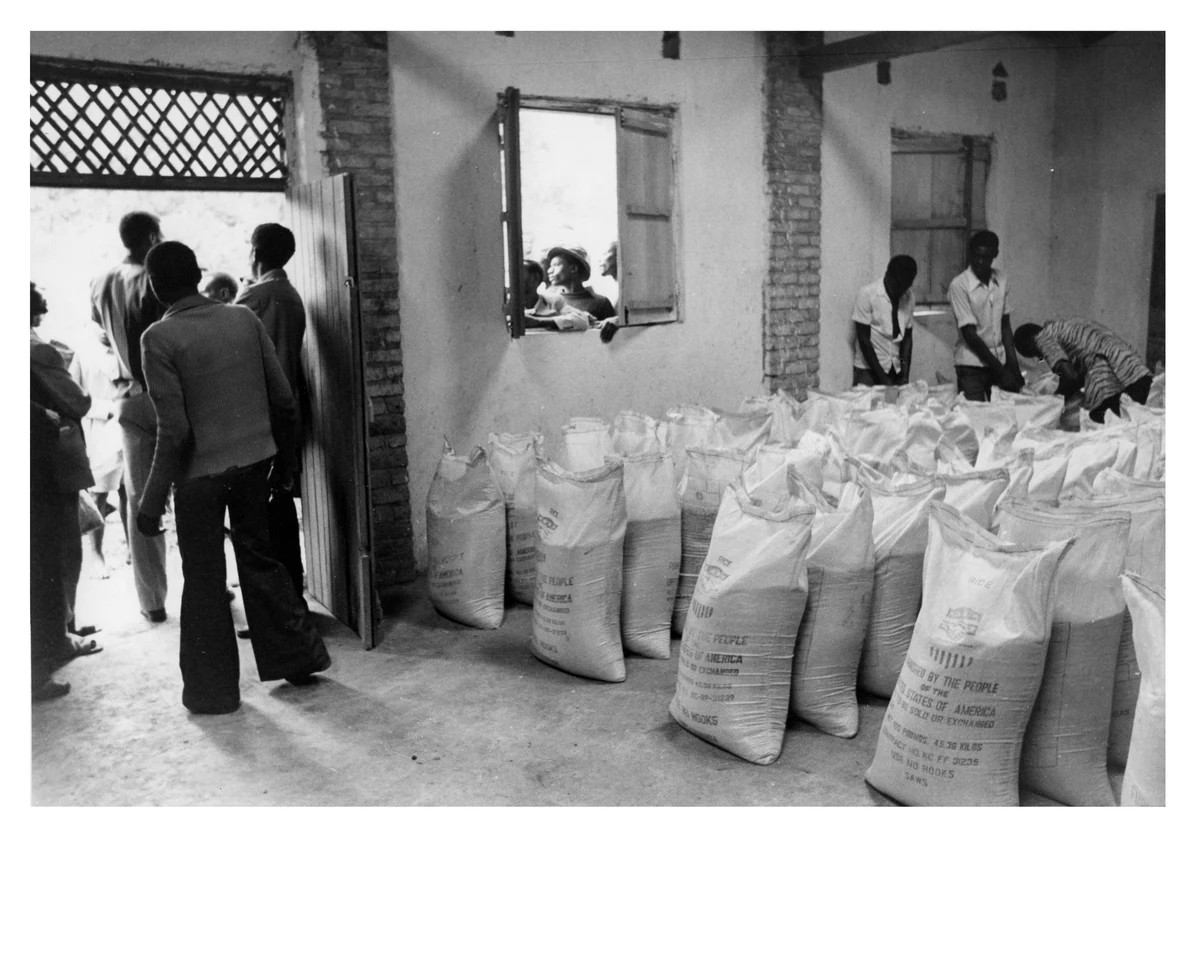
A warehouse full of goods is not the same as assistance reaching the people who need it. Transport, safe access, distribution arrangements, suitable items and accountability all matter. Unrequested donations can also create storage and sorting burdens. The appropriate form of support depends on the response and the expressed needs of affected communities.
The archival photograph shows USAID-donated rice in Rwanda in 1983, according to its historical caption. It illustrates one part of aid logistics, not the present UN coordination system or a current distribution programme. Historical imagery should not be used to imply that a service is available now.
Information is part of the service
People may need to know whether a service is accessible, which languages it supports, whether documents are required and how to complain safely. Publishing a generic agency logo does not answer those questions. Nor should a public website expose an applicant's identity, health details or displacement history to demonstrate that coordination is happening.
The Ukraine information case on SharedMorrow explores how changing rules and referral information affect people trying to use services. Its lessons are about maintaining accurate, dated information and explaining the next step. They cannot be copied as current eligibility rules for another country or programme.
What remains difficult
Access restrictions, uneven funding and incomplete data can leave serious gaps. Different organisations may count people or activities differently, so totals should not be added without checking definitions. A coordinated response can still be under-resourced; a meeting or dashboard is not evidence that every need has been met.
Is every international response organised through clusters? No. Structures depend on the context and may include national sector arrangements or other coordination models.
How can a reader help responsibly? Use verified appeals and locally relevant information, respect people's privacy, and check what the responding organisations actually request. Do not assume that sending unsolicited goods is always the fastest or most useful option.