
Explainer · Infrastructure failures
How can one infrastructure failure trigger several others?
Electricity, water, communications, transport and fuel systems depend on one another. A disruption can spread through those connections even when the original hazard has not physically damaged every service.
SharedMorrow Editorial · Last reviewed 2026-10-05
A network of dependencies
A water treatment plant may need electricity for pumps and controls. A mobile network may rely on backup batteries, fuel deliveries and working data links. A repair crew may need open roads, communications and spare parts. Calling each of these a separate outage can hide the connections that determine restoration.
A cascading failure is a sequence in which one disruption contributes to another. A common-cause failure is different: the same flood or cold spell can independently affect several systems at once. Real disasters often contain both. Understanding which mechanism is operating helps explain why restoring one asset does not immediately restore the whole service.
A dependency map to read, not a prediction
| Service | Examples of what it may depend on |
|---|---|
| Water supply | Power, treatment materials, pumps, communications and functioning pipes |
| Electricity generation | Fuel, cooling, control systems, transmission and staff access |
| Telecommunications | Power, batteries, generators, backhaul connections and maintenance access |
| Fuel delivery | Roads or pipelines, pumps, power, dispatch information and safe access |
This table is a conceptual map. It is not an inventory of any particular city. A local operator may have redundancy or a different design. The important question is where nominally separate backups still share one vulnerable resource.
Why a backup can fail with the main system
- The main electricity supply is interrupted.
- A generator starts, but its fuel supply is finite.
- Flooded roads or disrupted pumps delay fuel replenishment.
- Communications or service availability declines when the backup can no longer operate.
The generator did not necessarily malfunction. The surrounding logistics failed. Similarly, two data links may share one cable route, and two suppliers may depend on the same bridge. Redundancy on an organisation chart is not always independence in the physical world.
The 2021 freeze illustrates a feedback loop
The FERC and NERC investigation of the February 2021 cold-weather event described problems across electricity and natural-gas systems. Cold affected equipment and fuel availability. Some gas infrastructure also depended on electricity, while gas-fired generation depended on fuel. These links help explain how failures could reinforce one another.
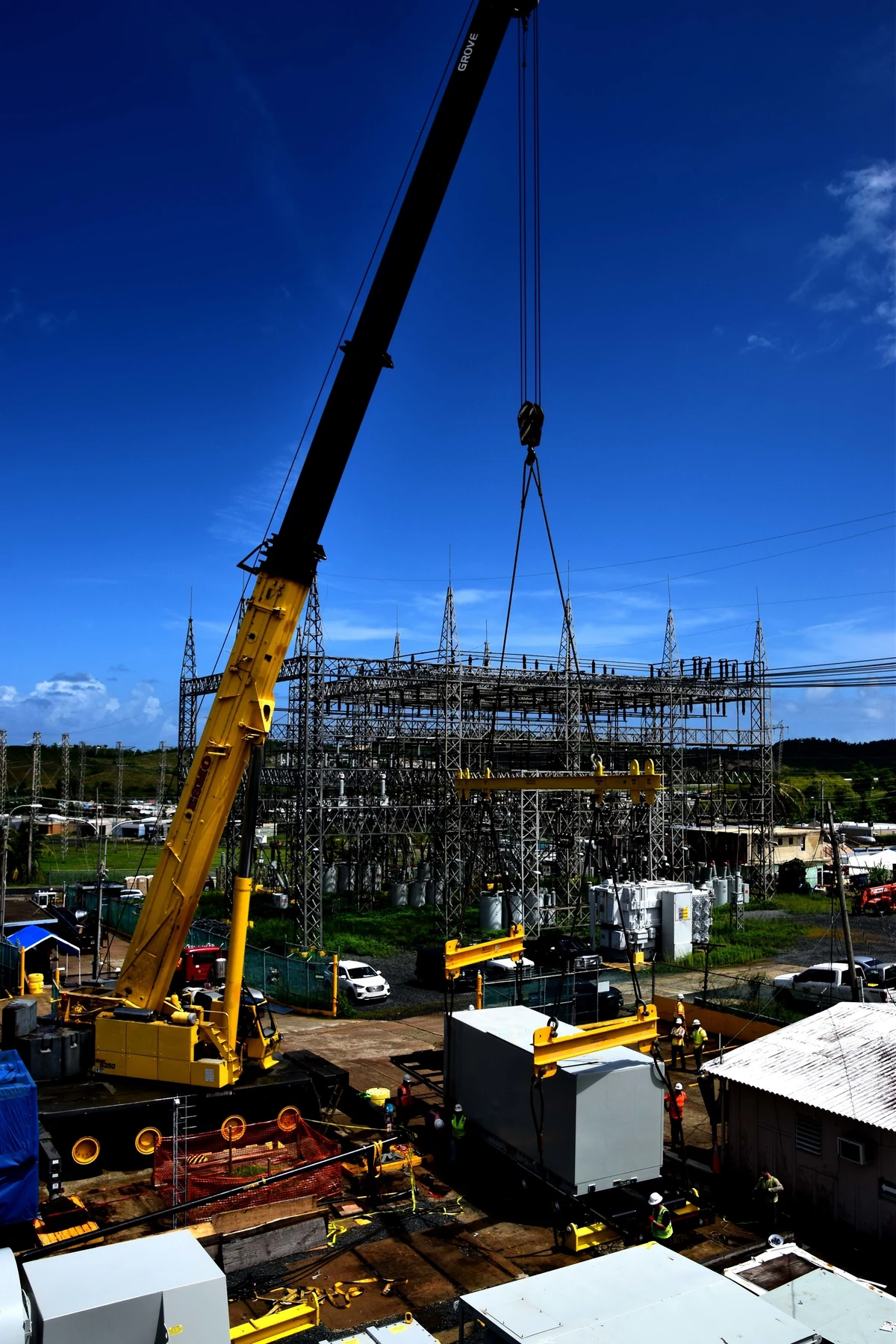
That example should not be turned into a claim that every power outage has the same cause. The report concerns a specific event and interconnected systems. The primary photograph here shows a different, explicitly dated recovery operation at a Puerto Rico substation in 2018, illustrating the physical work involved in power restoration rather than documenting the Texas freeze.
Restoration is an ordered process
Repairing a visible line may be only one step. Operators may need to inspect equipment, re-energise sections safely, restore control functions and confirm that downstream systems can receive service. A treatment plant may require checks before supplying safe water even after its lights return.
This is why “power restored” and “normal services restored” can have different timestamps. Public communication is more useful when it names the service, area and stage of recovery. A percentage without a denominator can conceal which customers or functions remain unavailable.
What households and communities can learn
Ask which needs become urgent when several services are unavailable together: water, accessible transport, communication, refrigeration or powered medical equipment. Plans should consider the relevant local advice and individual needs rather than assume that one gadget solves every dependency.
Does resilience mean preventing every failure? No. It also means limiting how far disruption spreads and restoring essential functions safely.
Can this diagram estimate when my service will return? No. Restoration timing requires current operator information. The diagram explains why the answer may change as dependencies become clearer.