
Explainer · Preparedness & recovery
Why do rumours spread so quickly during a crisis?
Urgency creates demand for answers before reliable information is complete. A plausible message can travel through trusted relationships faster than its evidence can be checked.
SharedMorrow Editorial · Last reviewed 2026-10-05
An information gap is not an empty space
After a disaster, people need to know whether a road is open, where help is available and whether relatives are safe. Official information may be delayed because the underlying situation is changing or communications are damaged. In that gap, an incomplete account can feel more useful than an honest “not yet confirmed.”
People may share a message to protect others, not to deceive them. A neighbour's forwarded screenshot carries the trust of the relationship even when its original author is unknown. Repetition then makes the claim familiar, and familiarity can be mistaken for independent confirmation. Ten forwards of one message are still one unverified source.
Different problems need different responses
| Information problem | What has gone wrong |
|---|---|
| Outdated but once accurate | The time or conditions have changed |
| Real image, wrong location | The evidence is genuine but attached to a false context |
| Unverified interpretation | An observation has been turned into a conclusion without enough support |
| Deliberate deception | Someone is knowingly trying to mislead; intent needs evidence before it is alleged |
Calling every mistake a lie can damage trust and make corrections harder. The factual question and the question of intent should be kept separate. A person can be wrong without being a malicious actor.
How a rumour acquires authority
- An uncertain observation becomes a confident short statement.
- A screenshot loses its date, link or original context.
- Familiar contacts forward it with an urgent instruction.
- Repeated appearances make it look like several sources agree.
Compression is part of the problem. “This road was closed at 08:00 pending inspection” can become “all exits are closed.” The shorter version travels easily but changes the decision a reader might make. Corrections need to restore the missing scope and time, not just attach a “false” label.
A worked example, not a real incident
Imagine a message claiming that a relief centre requires an identity document before anyone can receive water. The message could be outdated, refer to a different service, or be invented. Forwarding it may discourage people from seeking help. A useful check identifies the exact centre, date, service and responsible organisation, then asks what the current rule actually is.
Do not publish the names or documents of people seeking assistance to prove the claim. Verification can itself cause harm if it exposes personal information. The goal is to establish the service rule and a safe way to confirm it, not to turn applicants into evidence for strangers.
What good public communication does
WHO's work on infodemics emphasises that an excess of information, including misleading material, can make reliable guidance harder to find. Useful communication states what is known, what remains uncertain, when the information was checked and where updates will appear. Admitting uncertainty early can prevent a later correction from looking like concealment.
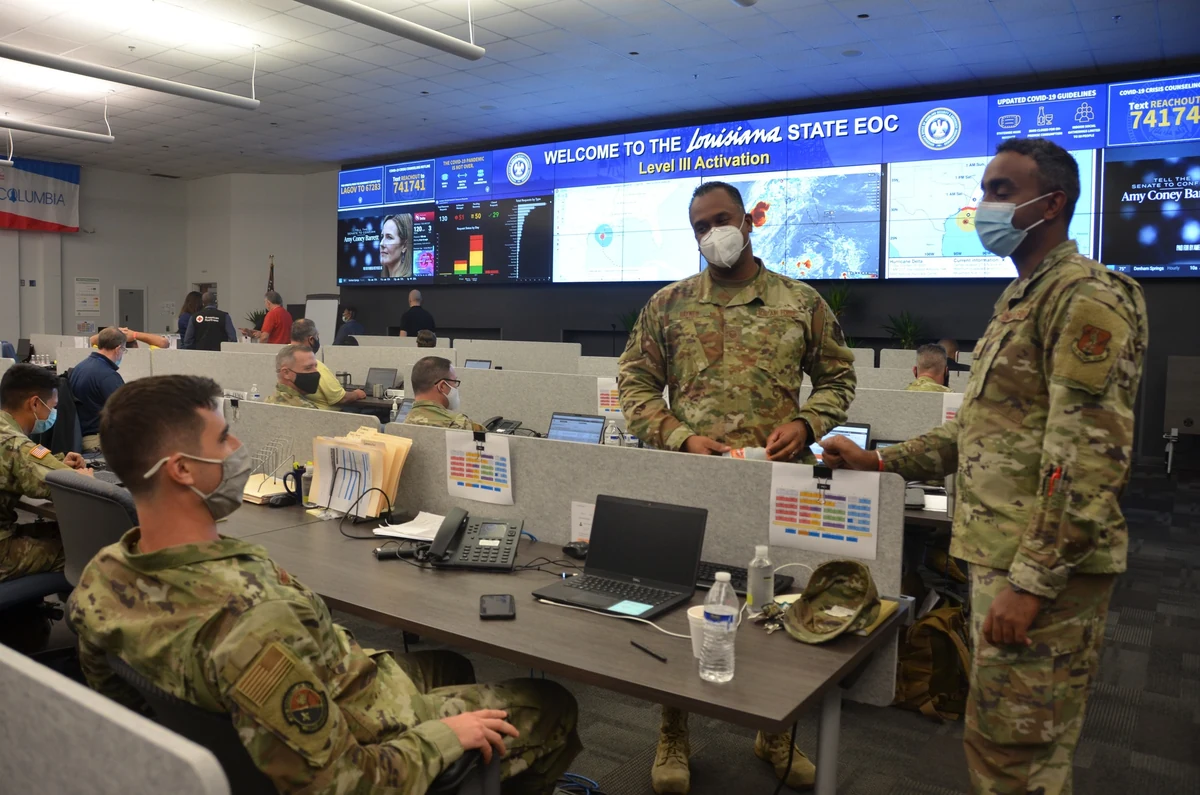
The historical emergency-operations photograph illustrates coordinated information work during Hurricane Delta in 2020. It does not depict a rumour, identify anyone as a source of misinformation or establish that all official messages are correct. Official claims also need the right date, scope and evidence.
Before sharing
Can I identify the original source? Does the claim apply to this place and time? Is an image being used as proof of something it cannot show? Would forwarding it change a safety decision or expose someone? If a consequential claim cannot be verified, say that clearly and avoid amplifying the unsupported instruction.
Should a correction repeat every detail of the rumour? Usually the useful fact and action should lead. Repeat only enough of the mistaken claim for readers to understand what is being corrected.
Does verification mean waiting for perfect certainty? No. It means distinguishing confirmed facts, provisional reports and unknowns so people can judge the information honestly.