
Explainer · Storms & floods
What is an atmospheric river?
An atmospheric river is a concentrated corridor of water-vapour transport. It can replenish a region's water supply or help produce destructive flooding, depending on where and how it arrives.
SharedMorrow Editorial · Last reviewed 2026-10-05
A transport system, not a river in the sky
The name describes a pattern in moving air. Most of the transported water is invisible vapour, not a suspended stream of liquid water. Winds carry moist air over long distances, often ahead of the cold front of an extratropical storm. Satellite observations, weather balloons and aircraft measurements help forecasters identify the corridor and estimate its strength.
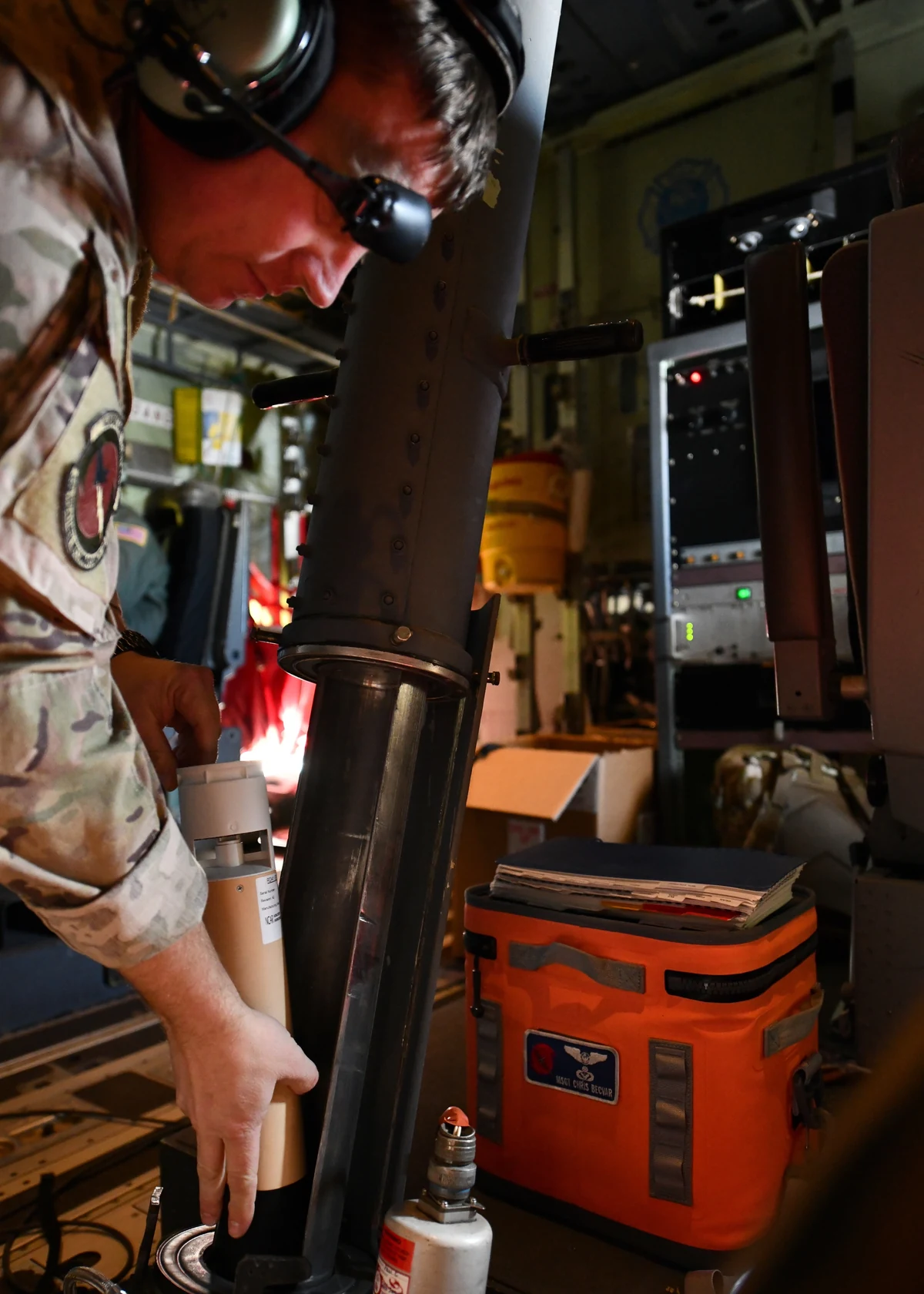
The primary photograph shows a dropsonde being prepared during an atmospheric-river reconnaissance mission. The instrument samples conditions as it falls. It does not photograph a literal river; it helps measure the moisture, pressure, temperature and winds that a forecast needs.
Why a mountain range can change the outcome
- A moist air corridor reaches a coast.
- Terrain forces some of that air upward, where it cools and moisture condenses.
- Rain or snow falls, with the balance depending on temperature and elevation.
- The storm's duration and movement determine how long the same catchments receive precipitation.
A fast-moving event can provide useful water without overwhelming rivers. A strong or persistent event can deliver repeated rain to already wet ground. If the freezing level is high, more precipitation may arrive as rain rather than being temporarily stored as mountain snow. This changes the timing of runoff as well as its amount.
A label is not an impact forecast
| Ingredient | Why it changes the risk |
|---|---|
| Moisture transport | Determines how much water vapour the moving air brings |
| Duration and direction | Controls which slopes and catchments receive sustained precipitation |
| Freezing level | Helps determine where water is stored as snow and where rain runs off |
| Antecedent conditions | Wet soils, full channels and recent burn scars can amplify consequences |
“Atmospheric river approaching” therefore leaves several questions unanswered. How strong is it? How long will it last? Where will the heaviest precipitation fall? What condition is the watershed in? A dramatic satellite ribbon alone cannot answer those questions.
California illustrates both sides
Atmospheric rivers are an important part of the water cycle along the western United States. They can build snowpack and replenish water supplies. Sequences of storms can also saturate catchments and create flooding or landslide hazards. Calling every event a disaster misses their role in supplying water; calling the next storm beneficial because a region has drought misses the danger of rapid runoff.
The same region can need water and face an immediate flood emergency. Water falling on the wrong timescale, or outside useful storage, does not automatically solve a long-term shortage. A reservoir, a snowpack and groundwater respond differently.
Climate change and the forecast limits
A warmer atmosphere can support greater moisture transport, but the future impact in a particular place also depends on changes in storm tracks and temperature. The location and timing of landfall remain forecasting challenges. A small shift can move the heaviest rain into a different catchment.
For immediate decisions, read the local weather and flood warnings rather than treating the atmospheric-river label as an instruction by itself. A warning about debris flows below a recent wildfire can matter even when the expected rain would be manageable in an unburned landscape.
Questions readers often bring
Is every atmospheric river a Pineapple Express? No. That name is commonly used for a subset associated with moisture transport from around Hawaii toward western North America.
Are these events new? No. The term and observing tools may be new to a reader; the physical transport process is not. Changing intensity and impacts require evidence across time.
Is it the same as a tropical cyclone? No. Both can transport moisture, but the terms describe different features of the weather system.