
Storms & floods
How Should You Document Home and Property Damage After a Flood?
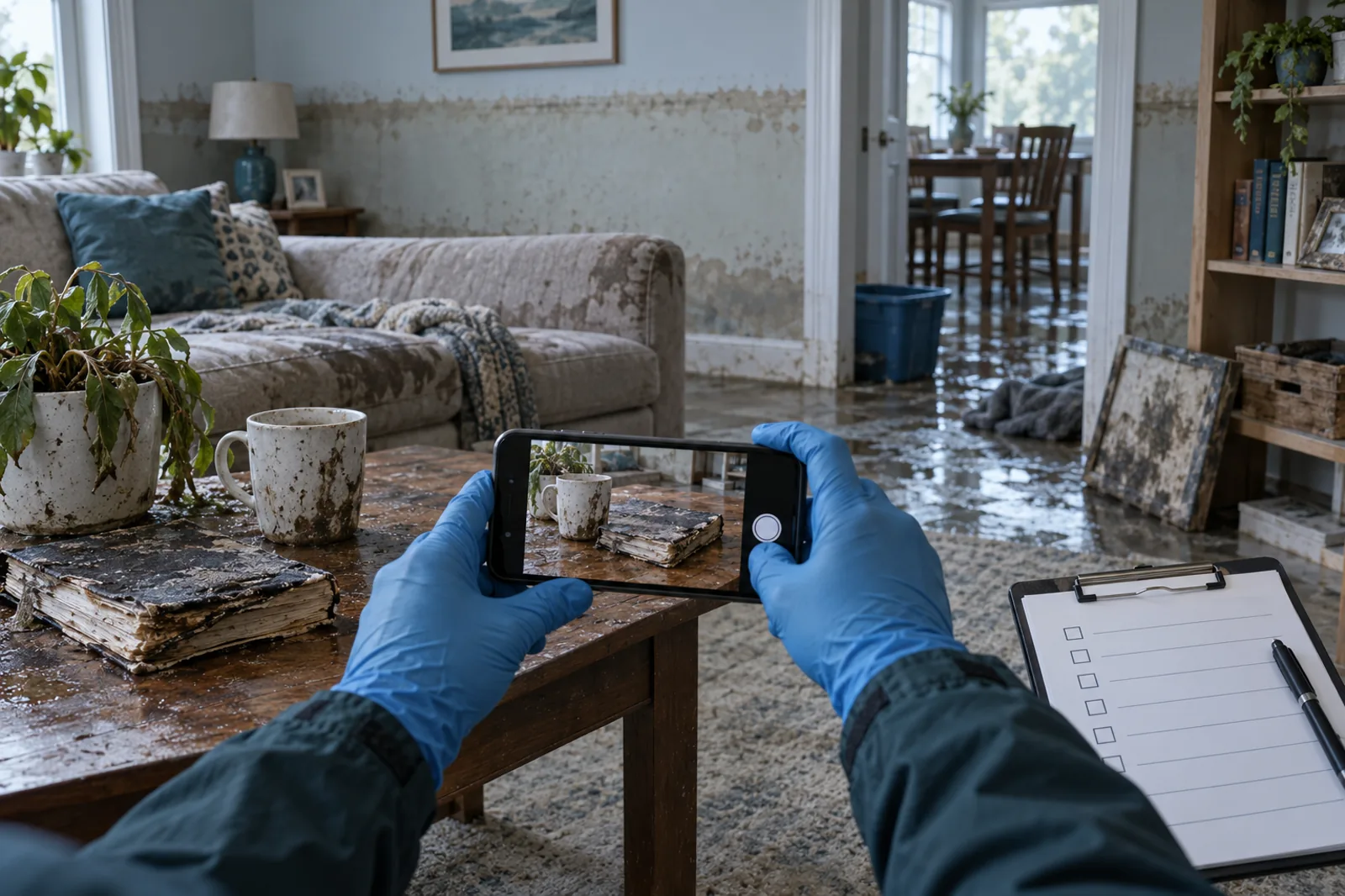
After safe entry and before moving or discarding items, create a dated, backed-up record that includes both overall context and close detail.
SharedMorrow Editorial · Last reviewed 2026-10-05
Direct answer
After safe entry and before moving or discarding items, create a dated, backed-up record that includes both overall context and close detail.
Start here
Photograph the exterior and each room broadly, then water lines, structural damage, appliance labels, and individual items.
Work through the decision
Add a safe scale reference and write the date, room, item, and damage type; never approach an unstable element for a better image. Keep an inventory with receipts, serial numbers, estimates, and official notices, but never post identity or policy numbers publicly.
Common mistake
Discard contaminated items only when local authorities allow; photograph and record quantity, reason, and destination first. Close-ups without context, late reconstruction of the scene, overwriting originals, and entering danger for a photo all weaken the record.
When to stop and get help
Confirm any legal, tenancy, insurance, or aid-specific requirement with the responsible local organization rather than assuming one checklist fits everywhere.
Next step
Back up originals in two separate places, preserve unedited files, and log communication dates with assistance providers, landlords, or insurers.