
Explainer · Storms & floods
Why is extreme weather changing?
Heat, heavy rain and drought do not respond to warming in the same way. Understanding the difference makes a disaster headline much more useful.
SharedMorrow Editorial · Last reviewed 2026-10-05
A warmer baseline changes the odds
A hot afternoon is weather. The range of afternoons a place can expect over decades is climate. When that distribution shifts toward higher temperatures, a threshold that used to be crossed rarely can be crossed more often. The threshold has not moved; the climate around it has. This is why a small change in the global average can accompany a much larger change in the frequency of unusually hot conditions.
That does not mean every kind of extreme is becoming more frequent everywhere. Human influence on increasing heat extremes is much clearer than a claim about the global number of all storms. Local rainfall, drought and wind also depend on circulation, season and geography. A count of disaster headlines mixes all of those processes with changes in reporting and exposure.
Three links in the chain
- Greenhouse gases reduce the rate at which Earth loses heat to space; the climate system gains energy until its energy balance adjusts.
- Warmer conditions change evaporation, the amount of water vapour that can be present, and the background on which weather systems develop.
- A particular circulation pattern gathers those ingredients into a heatwave, rainstorm or dry spell; local conditions determine the damage.
Think of a heatwave over a city. A persistent weather pattern may limit cloud and ventilation. Warming raises the starting temperature, while dark surfaces and warm nights can add local stress. These explanations can all be true together. Finding a weather mechanism does not rule out a climate influence.
Not all evidence answers the same question
| Question | Evidence that helps answer it |
|---|---|
| Is this event unusual here? | Local observations and a clearly stated comparison period |
| Is this type of event changing? | Long, quality-controlled records across comparable locations |
| Did warming affect this event? | An attribution study comparing climates with and without human influence |
| Why was the damage so severe? | Hazard intensity plus buildings, exposure, warning access and vulnerability |
What an attribution result means
An attribution study may estimate how much more likely an event became, or how much hotter or wetter it was. Those are different quantities. A result about the likelihood of a defined regional heatwave cannot be transferred to every photograph from that summer. The geographical area, duration and intensity threshold are part of the result, not footnotes to ignore.
The IPCC's assessment finds strong evidence for human influence on heat extremes and increasing heavy precipitation in many regions. Confidence is less uniform for other hazards. A careful article can be decisive about the well-established physics while saying that a specific storm has not yet been assessed.
Why losses can rise faster than the hazard
More people and assets may occupy floodplains or fire-prone landscapes. Ageing drainage, inequality and limited cooling can turn a comparable physical event into a larger disaster. Conversely, better construction and warnings can reduce losses even as a hazard worsens. A damage bill alone cannot isolate the climate signal.
For readers, the practical question is therefore twofold: what is changing in the hazard, and what makes this place exposed? Local maps and warnings answer immediate questions; climate assessments help explain the longer direction of travel. Neither substitutes for the other.
Questions worth asking
Does a cold spell disprove warming? No. A changing distribution still contains cold weather; one episode does not establish the long-term trend.
Does “climate-related” mean inevitable? No. Emissions affect future warming, while planning and preparedness affect consequences. The size of the risk is not fixed.
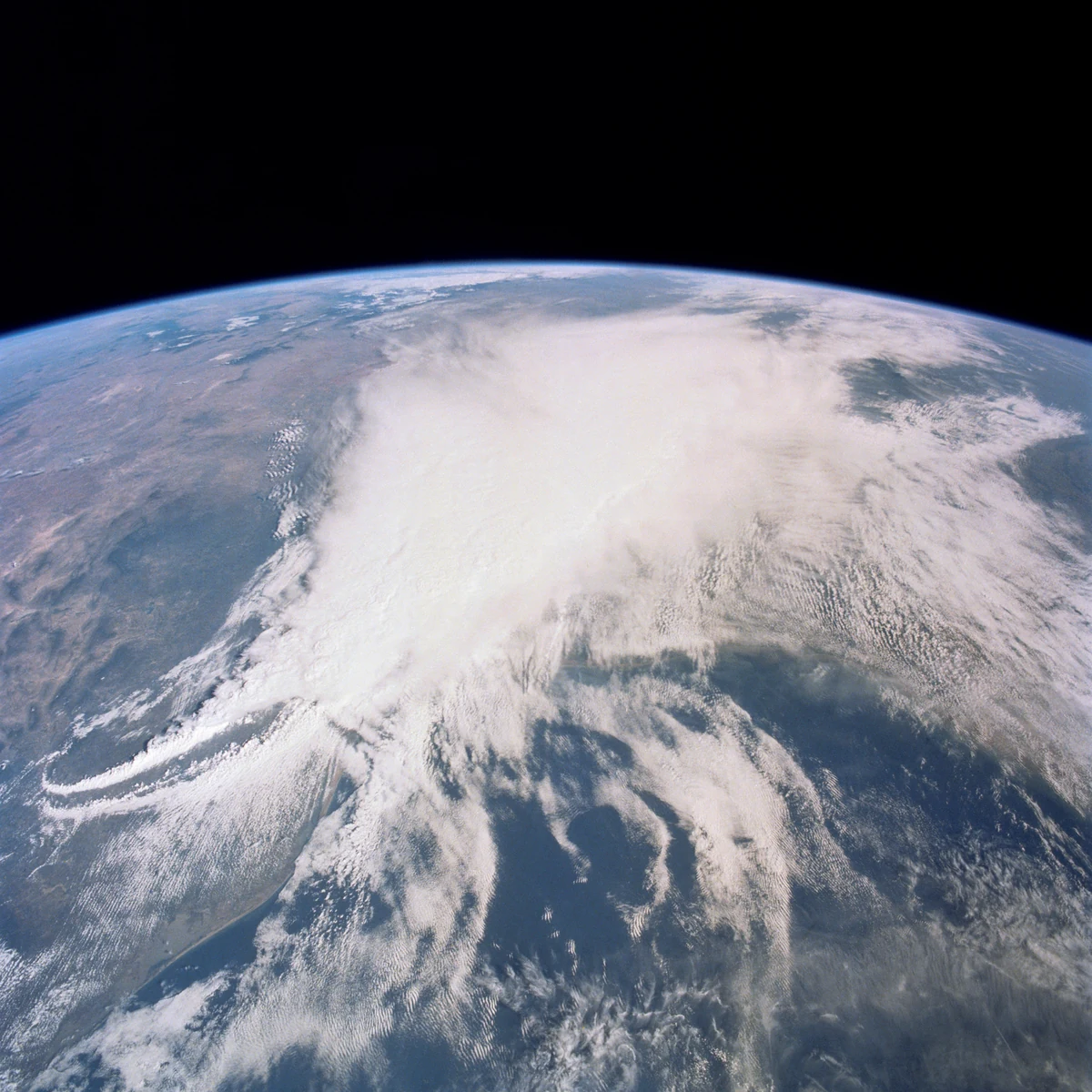
Can one dramatic photograph prove a trend? No. The historical storm photograph here shows weather structure. Detecting a trend requires observations across time, not a comparison of memorable pictures.