
Explainer · Earthquakes & tsunamis
Why is the first tsunami wave not always the largest?
A tsunami is a sequence of long waves, not necessarily one towering breaker. The source, ocean floor and coastline reshape that sequence, so an early lull does not establish that the danger has passed.
SharedMorrow Editorial · Last reviewed 2026-10-05
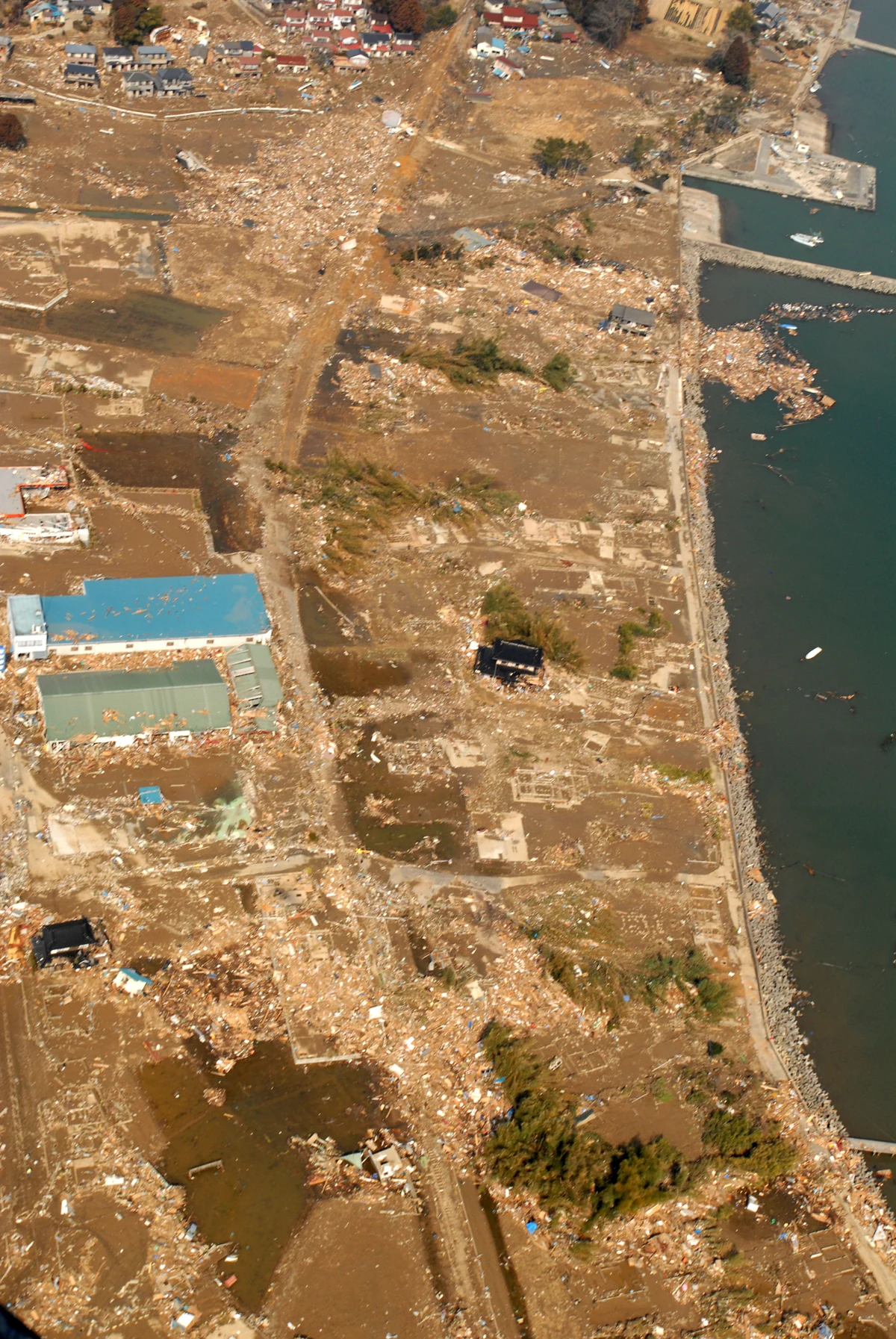
A large volume of water is displaced
Many destructive tsunamis begin when an undersea earthquake moves the seafloor and displaces the water above it. Landslides, volcanic processes and other disturbances can also generate tsunamis. The source matters: a large earthquake that produces little vertical displacement of water may create a very different tsunami hazard from one that strongly deforms the seabed.
In deep water, tsunami waves can travel rapidly while having a small surface height and a very long wavelength. A ship far offshore may not experience them as a dramatic wall of water. As the waves enter shallower water, their speed and shape change and local water levels and currents can become dangerous.
Why the sequence changes
- The source produces a pattern of water displacement rather than a single identical wave everywhere.
- Different paths and water depths change arrival times and wave behaviour.
- Reflections and interactions with bays, shelves and harbours can reinforce some later motions.
- Water continues moving between arrivals, creating strong currents and changing inundation.
The result is not a simple countdown in which each wave must be smaller than the previous one. The largest local wave can arrive later. The timing and size can also differ between nearby stretches of coast.
Terms that should not be collapsed into one number
| Term | What it describes |
|---|---|
| Wave height | A vertical measure of the wave at a specified location and reference |
| Run-up | The maximum elevation reached on land relative to a defined sea level |
| Inundation distance | How far water travels inland from the shoreline |
| Current speed | How fast water moves, important even where the visible height seems modest |
A harbour can have hazardous currents without the kind of high breaking wave shown in a film. An image from one town cannot establish the run-up or safe boundary at another. Local topography is part of the explanation.
The 2011 Japan tsunami was not one uniform event
The March 2011 earthquake generated a tsunami that affected widely separated coasts. Along northeastern Japan, the consequences varied with local terrain, coastal form and exposure. The historical photograph documents damage near Sendai; it does not show the first wave or establish the timing of the largest wave there.
Field surveys, tide gauges and modelling help reconstruct what happened. Each has limits. A model may simplify the coastline or omit some breaking-wave processes. A single damaged building provides evidence about that location, not a complete history of the whole coast.
Natural warnings and official messages
Near a source, strong or long shaking, an unusual rapid sea-level change or a loud ocean roar may be natural warnings. Local authorities explain which signs and routes apply. A nearby tsunami can leave too little time to wait for a phone message.
For distant events, warning centres combine earthquake observations with sea-level measurements and models. Messages can change as evidence arrives. Leaving a safe area after the first wave because the sea looks calmer can put people back into a continuing hazard. Return only when the responsible authorities give the applicable all-clear.
Common questions
Does the sea always withdraw first? No. A sudden retreat can be a warning, but its absence does not establish safety.
Does every large offshore earthquake cause a tsunami? No. Depth, fault motion, seafloor displacement and other characteristics matter.
Can I watch from the beach if the forecast wave is small? Do not use a headline height as permission to approach. Currents, local amplification and uncertainty are reasons to follow the coastal warning and exclusion instructions.